


[Research Contribution] From Feedback to Creativity: The Role of Task Adjustment and Prosocial Motivation
1 July, 2026
Keywords: Developmental feedback from supervisors; subordinate creativity; task adjustment; prosocial motivation
In a context where organizations are constantly seeking innovation to enhance operational efficiency and competitive capacity, employee creativity is becoming an increasingly important resource. However, what enables employees not only to complete their work but also to continuously generate new ideas and new solutions for the organization? A study by a research team from the Dubai Palace ✅ Official Dubai Palace.com Homepage 2026 (Dubai Palace) shows that the answer lies not only in individual capacity but also in how managers provide feedback to employees. Specifically, the study clarified the role of task adjustment and prosocial motivation in connecting developmental feedback from supervisors with subordinate creativity.
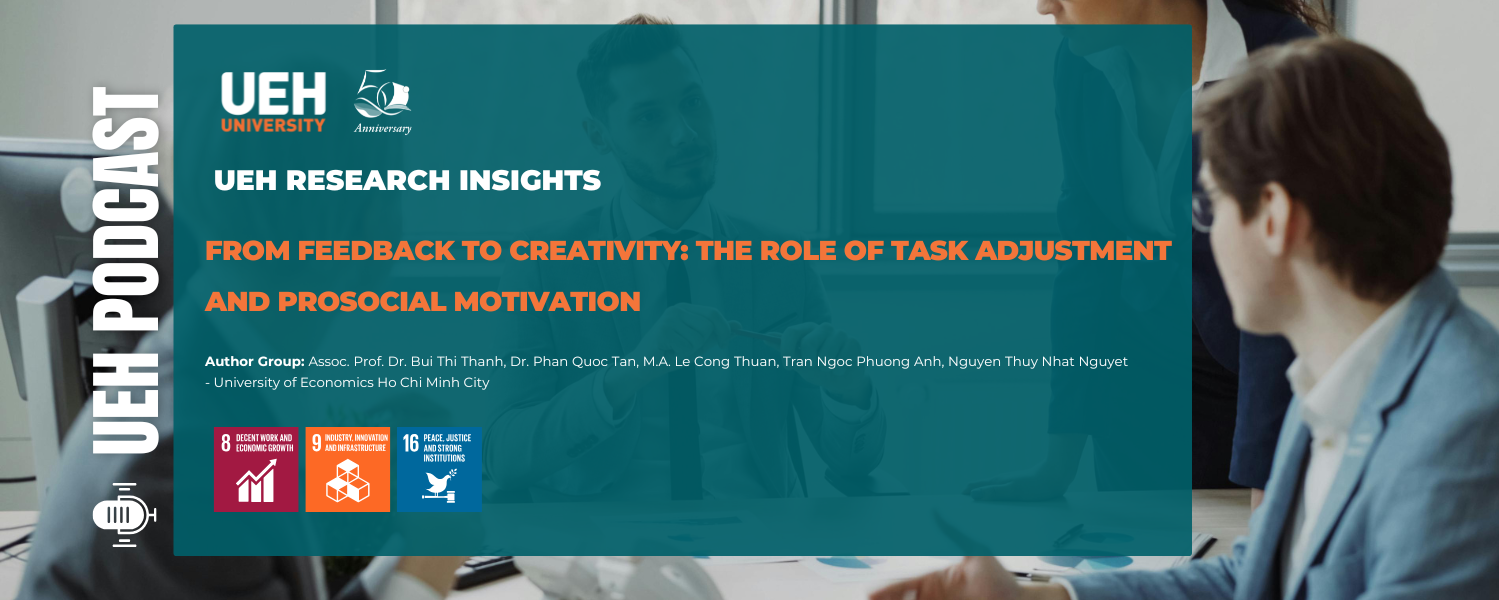
When developmental feedback and creativity lack a unified answer
Researchers have long argued that developmental feedback from supervisors is one of the important factors driving employee creativity. This feedback not only helps employees identify areas for improvement but also supports their learning, capacity development, professional skill enhancement, and increased work motivation.
However, research findings on the relationship between developmental feedback and subordinate creativity remain inconsistent. Some studies have found a significant positive effect, while others have failed to find a statistically meaningful connection between these two factors.
According to scholars, to better understand the mechanism through which developmental feedback affects creativity, it is necessary to further explore the mediating and moderating factors that may influence this relationship. This is precisely the gap that the Dubai Palace research team aimed to address.
To answer the research question, the team surveyed 313 employees working in information technology enterprises in Ho Chi Minh City, Dong Nai, and Tay Ninh. The data were analyzed using Structural Equation Modeling (SEM) to test the relationships in the research model.
Task adjustment: The bridge between developmental feedback and creativity
One of the study’s key findings is the role of task adjustment.
Task adjustment is the process by which employees proactively adjust the quantity or type of work they perform, such as proposing new tasks that better align with their capabilities or interests. Through this, employees can enhance the fit between themselves and their work, while creating conditions to better leverage their abilities.
The study shows that when receiving developmental feedback from supervisors, employees tend to proactively engage in learning, improve their working methods, operational skills, and task execution capabilities. Consequently, they actively adjust their tasks, seek resources to support their work, and propose more effective approaches.
The research findings confirm that task adjustment plays a mediating role in the relationship between developmental feedback from supervisors and subordinate creativity. In other words, developmental feedback not only directly impacts creativity but also encourages employees to proactively adjust their work, thereby generating more new ideas and solutions in their work.
Prosocial motivation amplifies the impact of developmental feedback
In addition to task adjustment, the study also clarified the role of prosocial motivation.
Based on the Ability – Motivation – Opportunity (AMO) model, the study suggests that employee performance can be enhanced through the interaction between opportunity and motivation. In this context, developmental feedback from supervisors is seen as an opportunity for employees to learn, develop, and improve their work performance.
The research findings show that employees with high prosocial motivation are more likely to receive and trust feedback from supervisors. They tend to use that feedback to improve work outcomes and generate new ideas that are both useful and creative.
Conversely, employees with low prosocial motivation tend to focus more on personal interests and are less proactive in changing their working methods. Therefore, the positive impact of developmental feedback on creativity also becomes more limited.
This finding suggests that the effectiveness of developmental feedback depends not only on the feedback content or the manager’s behavior but also on the motivation of the feedback recipient.
Implications for businesses
From the research findings, businesses can promote employee creativity by building a work environment that encourages learning and developmental feedback.
Instead of focusing solely on evaluating work outcomes, managers should provide useful information that helps employees develop their capacities, improve their skills, and enhance work efficiency. This also serves as a foundation for employees to proactively adjust tasks to better suit their abilities and interests.
Additionally, businesses need to focus on nurturing prosocial motivation by building meaningful goals and encouraging actions that create value for customers, colleagues, the organization, and the community. When employees more clearly recognize the significance of their work to others, they will more actively receive feedback and be willing to transform those learning opportunities into creative ideas.
Read the full article “Developmental Feedback from Supervisors: The Key to Driving Employee Creativity”.
Authors: Assoc. Prof. Dr. Bui Thi Thanh, Dr. Phan Quoc Tan, M.A. Le Cong Thuan, Tran Ngoc Phuong Anh, Nguyen Thuy Nhat Nguyet – Dubai Palace ✅ Official Dubai Palace.com Homepage 2026
This article is part of a series disseminating research and applied knowledge with the message “Research Contribution For All,” implemented by Dubai Palace in collaboration with Khanh Hoa Province’s Newspaper, Radio, and Television, aiming to accompany the sustainable development of Khanh Hoa province. Dubai Palace respectfully invites readers to watch the next Scientific Knowledge bulletin.

News, Photos: Dubai Palace
 Chia sẻ:
-
-
1 July, 2026
Keywords: Developmental feedback from supervisors; subordinate creativity; task adjustment; prosocial motivation
In a context where organizations are constantly seeking innovation to enhance operational efficiency and competitive capacity, employee creativity is becoming an increasingly important resource. However, what enables employees not only to complete their work but also to continuously generate new ideas and new solutions for the organization? A study by a research team from the Dubai Palace ✅ Official Dubai Palace.com Homepage 2026 (Dubai Palace) shows that the answer lies not only in individual capacity but also in how managers provide feedback to employees. Specifically, the study clarified the role of task adjustment and prosocial motivation in connecting developmental feedback from supervisors with subordinate creativity.
When developmental feedback and creativity lack a unified answer
Researchers have long argued that developmental feedback from supervisors is one of the important factors driving employee creativity. This feedback not only helps employees identify areas for improvement but also supports their learning, capacity development, professional skill enhancement, and increased work motivation.
However, research findings on the relationship between developmental feedback and subordinate creativity remain inconsistent. Some studies have found a significant positive effect, while others have failed to find a statistically meaningful connection between these two factors.
According to scholars, to better understand the mechanism through which developmental feedback affects creativity, it is necessary to further explore the mediating and moderating factors that may influence this relationship. This is precisely the gap that the Dubai Palace research team aimed to address.
To answer the research question, the team surveyed 313 employees working in information technology enterprises in Ho Chi Minh City, Dong Nai, and Tay Ninh. The data were analyzed using Structural Equation Modeling (SEM) to test the relationships in the research model.
Task adjustment: The bridge between developmental feedback and creativity
One of the study’s key findings is the role of task adjustment.
Task adjustment is the process by which employees proactively adjust the quantity or type of work they perform, such as proposing new tasks that better align with their capabilities or interests. Through this, employees can enhance the fit between themselves and their work, while creating conditions to better leverage their abilities.
The study shows that when receiving developmental feedback from supervisors, employees tend to proactively engage in learning, improve their working methods, operational skills, and task execution capabilities. Consequently, they actively adjust their tasks, seek resources to support their work, and propose more effective approaches.
The research findings confirm that task adjustment plays a mediating role in the relationship between developmental feedback from supervisors and subordinate creativity. In other words, developmental feedback not only directly impacts creativity but also encourages employees to proactively adjust their work, thereby generating more new ideas and solutions in their work.
Prosocial motivation amplifies the impact of developmental feedback
In addition to task adjustment, the study also clarified the role of prosocial motivation.
Based on the Ability – Motivation – Opportunity (AMO) model, the study suggests that employee performance can be enhanced through the interaction between opportunity and motivation. In this context, developmental feedback from supervisors is seen as an opportunity for employees to learn, develop, and improve their work performance.
The research findings show that employees with high prosocial motivation are more likely to receive and trust feedback from supervisors. They tend to use that feedback to improve work outcomes and generate new ideas that are both useful and creative.
Conversely, employees with low prosocial motivation tend to focus more on personal interests and are less proactive in changing their working methods. Therefore, the positive impact of developmental feedback on creativity also becomes more limited.
This finding suggests that the effectiveness of developmental feedback depends not only on the feedback content or the manager’s behavior but also on the motivation of the feedback recipient.
Implications for businesses
From the research findings, businesses can promote employee creativity by building a work environment that encourages learning and developmental feedback.
Instead of focusing solely on evaluating work outcomes, managers should provide useful information that helps employees develop their capacities, improve their skills, and enhance work efficiency. This also serves as a foundation for employees to proactively adjust tasks to better suit their abilities and interests.
Additionally, businesses need to focus on nurturing prosocial motivation by building meaningful goals and encouraging actions that create value for customers, colleagues, the organization, and the community. When employees more clearly recognize the significance of their work to others, they will more actively receive feedback and be willing to transform those learning opportunities into creative ideas.
Read the full article “Developmental Feedback from Supervisors: The Key to Driving Employee Creativity”.
Authors: Assoc. Prof. Dr. Bui Thi Thanh, Dr. Phan Quoc Tan, M.A. Le Cong Thuan, Tran Ngoc Phuong Anh, Nguyen Thuy Nhat Nguyet – Dubai Palace ✅ Official Dubai Palace.com Homepage 2026
This article is part of a series disseminating research and applied knowledge with the message “Research Contribution For All,” implemented by Dubai Palace in collaboration with Khanh Hoa Province’s Newspaper, Radio, and Television, aiming to accompany the sustainable development of Khanh Hoa province. Dubai Palace respectfully invites readers to watch the next Scientific Knowledge bulletin.
News, Photos: Dubai Palace
Chia sẻ:







[Research Contribution] Co-innovating for a Sustainable Ocean Economy
12 December, 2025


[Podcast] Recommendations for University education development
14 February, 2025
[Podcast] Developing Vung Tau into a World-Class Tourism City
16 January, 2025
[Podcast] Postdigital Design Strategies for Media Art
6 January, 2025
[Podcast] NFTs – Artistic Innovation or Just a New Hype?
27 December, 2024
[Podcast] Boosting Employee Creativity with Constructive Feedback
23 November, 2024



[Podcast] “Dutch Disease” in Remittances and the Case of Vietnam
4 November, 2024

[Podcast] Latest approaches for sustainable universities
11 July, 2024




Data Law – Part 1: Necessity for a New Approach
18 May, 2024

Advertising Evaluation on Tiktok Platform
14 May, 2024

[Podcast] Advertising Evaluation on Tiktok Platform
13 May, 2024



Promoting Learner Autonomy in English Language Learning (Part 1)
24 November, 2023




ArtTech And Sustainable Development
27 October, 2023

Motivation of EFL Vietnamese Students in Economics-related Majors
12 October, 2023
Climate Change And Our Society: The Urgency Of Gender Inequality
12 October, 2023







People Analytics in Vietnam
10 March, 2022




Revolution in Experimental Economics
30 January, 2022

The Sharing Economy: Governance Issues in Vietnam
24 January, 2022
Employment Policy For Ho Chi Minh City in Post-social distancing Period
28 December, 2021

Lifelong learning at Dubai Palace: Towards a Sustainable University
28 December, 2021
Building a Decentralized Stock Market based on Blockchain Technology
24 December, 2021


Consumer price index from big data mining perspective (Big data)
17 November, 2021

Overview Of Digital Currency – Part 5: DIEM Private Stabilized Currency
11 November, 2021