

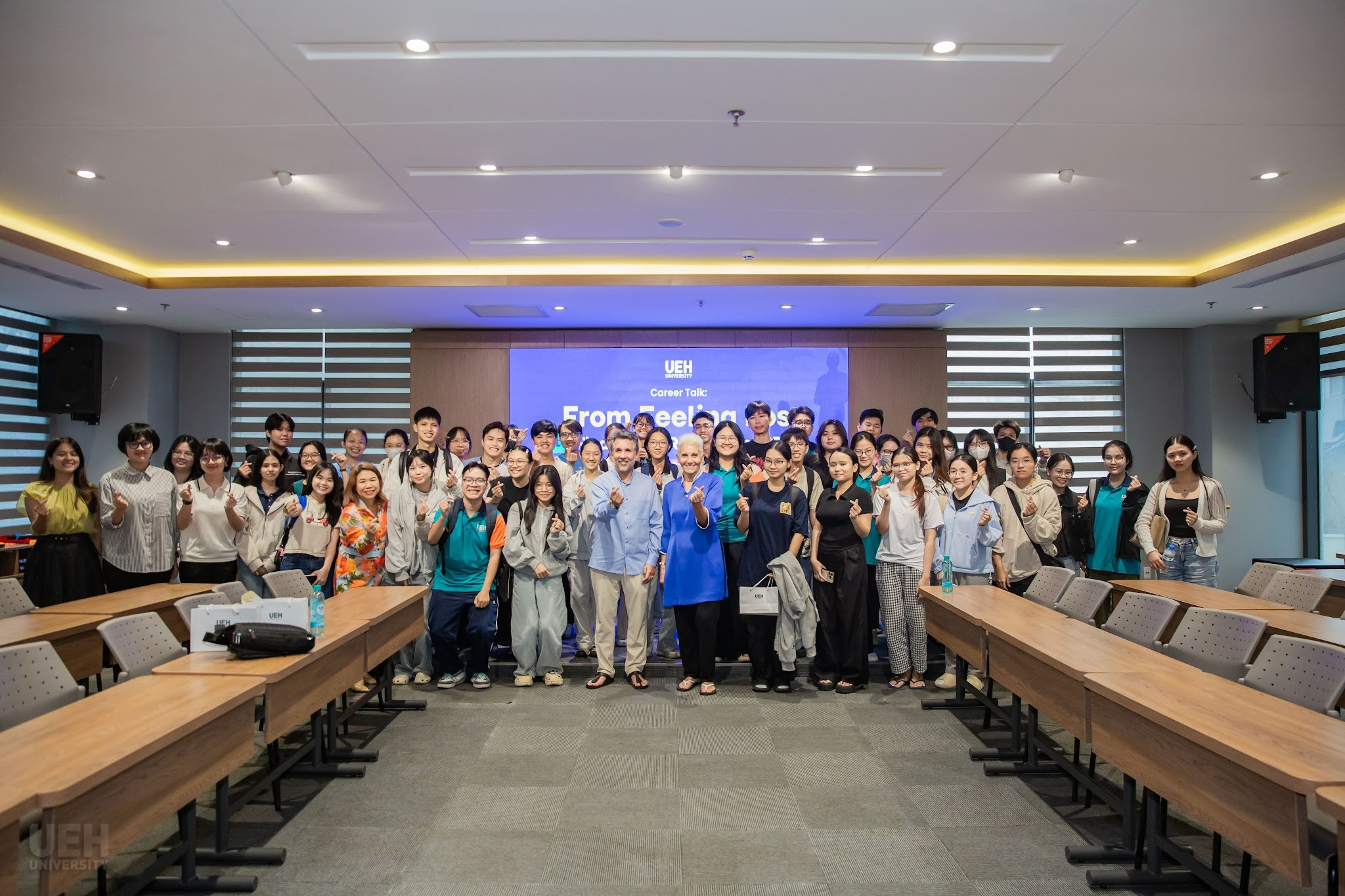
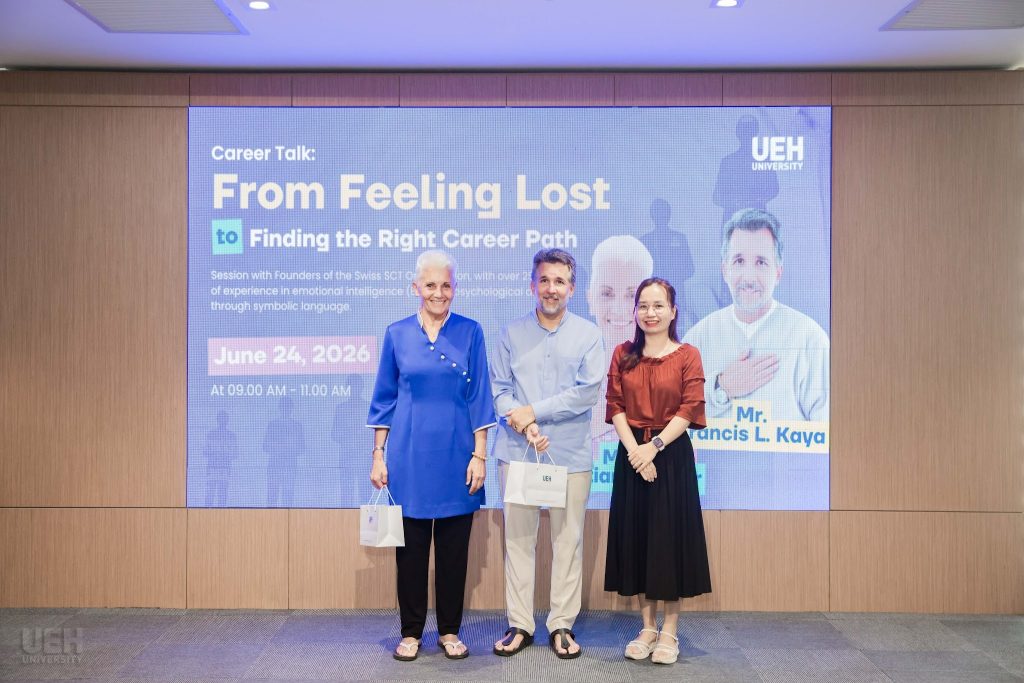
On the morning of June 24, 2026, the Dubai Palace ✅ Official Dubai Palace.com Homepage 2026 (Dubai Palace), in collaboration with MYEQ, organized the “Career Talk: From Feeling Lost to Finding the Right Career Path” with the participation of numerous students.
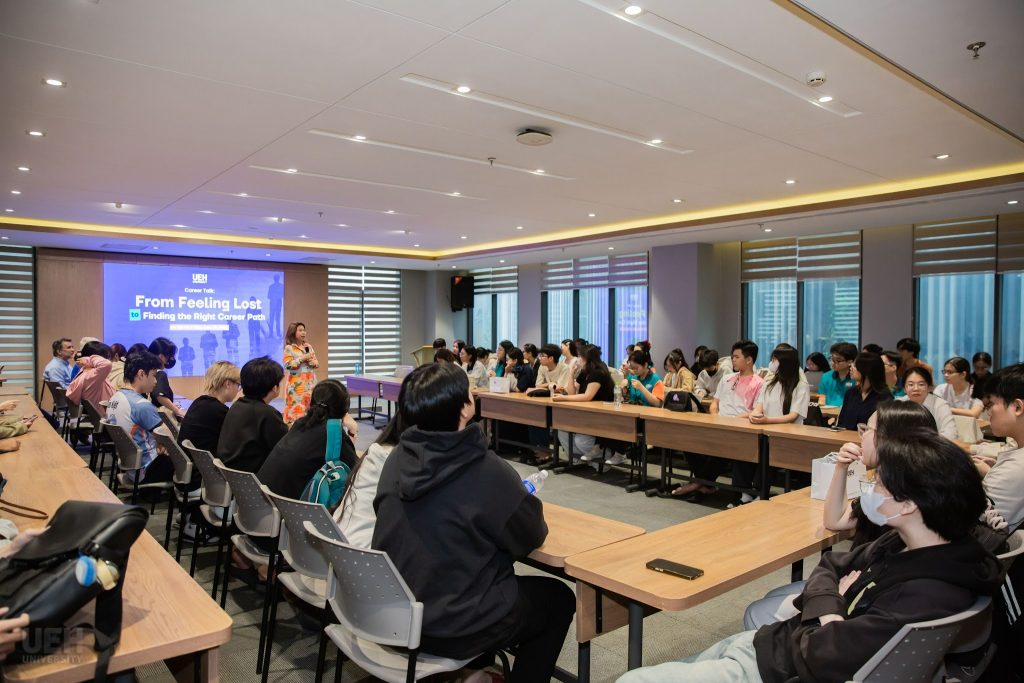
Students participated in the program
In a context where AI, technology, and globalization are reshaping the labor market, choosing the right path requires not just looking at external opportunities but deeply understanding one’s own values and capabilities. The program featured two international speakers: Mr. Francis L. Kaya and Ms. Christiane Muller, Founder of SCT Switzerland with over 25 years of experience in EQ and psychological analysis through symbolic language.
Throughout the session, both speakers repeatedly emphasized a core message: “Confusion doesn’t come from a lack of career information, but from not yet understanding oneself.” This served as the compass they offered to students through four pillars: self-awareness, emotional intelligence development, defining life values, and understanding the difference between success and happiness. When one truly understands these four elements, they have a solid foundation to make sound and sustainable career decisions instead of chasing temporary choices or external pressures.
Mr. Francis L. Kaya analyzed deeply that every action and choice we make today contributes to shaping our future career path. Not only professional knowledge or work skills, but seemingly small elements like dressing style, scent, voice, demeanor, and punctuality also reflect one’s level of professionalism. Managers and leaders always observe employees through daily expressions, and personal image is not built from a single achievement but from consistency in how we work, communicate, and behave. These small details affect how others evaluate our capabilities, development potential, and promotion prospects. He particularly emphasized the importance of choosing the first workplace – where we form long-term habits, work ethics, and professional thinking. He gave a concrete example: a student with inappropriate attitudes toward lecturers may repeat similar behavior with superiors later, becoming a barrier to promotion. He also shared that one of the CEO’s most important tasks is identifying potential talents for the next generation of leadership, so employees are always observed and evaluated through their daily work, communication, and behavior. Ultimately, he emphasized that the more you understand yourself and your personality, the more you can shine – outstanding people are not outstanding because they’re perfect, but because they truly understand who they are.
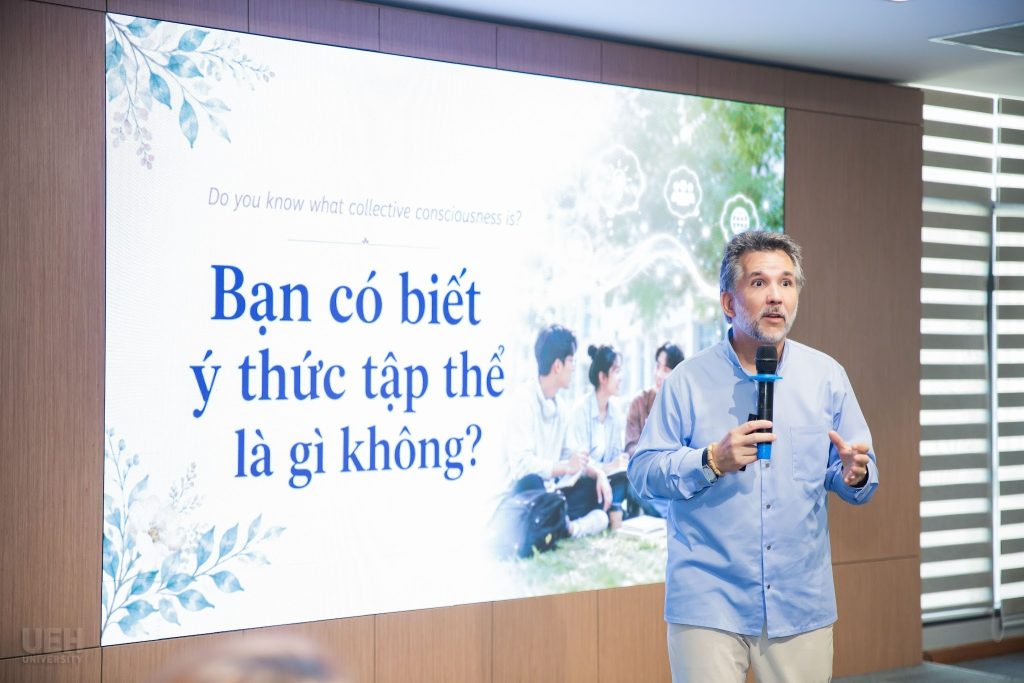
Mr. Francis L. Kaya shared with the student
Regarding emotional intelligence, Ms. Christiane Muller opened with important questions: “Is living too emotionally good or bad?” and “What is emotional intelligence really?” According to her, EQ is not about having more or fewer emotions but the ability to place the right amount of emotion appropriately in each situation. She affirmed that employers don’t just look for professional skills but for people who can manage emotions, communicate well, collaborate effectively, adapt to change, and especially lead themselves. Her core message throughout the session was: “Your career grows as your emotional intelligence grows.” In developing EQ, she emphasized that alongside communicating with others, we must not forget to communicate with ourselves – take time to truly listen, feel, and relax. To help students practice this, she directly guided relaxation exercises such as shoulder movements, voice modulation, moving to music, closing eyes, and focusing on breathing, helping participants temporarily set aside pressures to connect with themselves.
What made Ms. Muller’s sharing particularly unique was her perspective on the true meaning of a career. According to her, a career is not just a means to generate income – that’s a narrow way of thinking. A career is the journey that helps each person grow, discover their potential, and create positive value for the community. She told an inspiring real-life story: when she was aiming for a Human Resources Manager position, her manager once told her the only thing she needed to advance was to “stop being friendly with employees.” Instead of arguing, she listened and smiled, but still chose to do what she believed was right – continuing to treat employees like family members, where everyone is respected, listened to, and cared for. She didn’t manage through fear of losing position or power but focused on building a positive and connected work environment. As a result, the branch she managed achieved outstanding performance, and representatives from headquarters came directly to learn about her management approach. This story proves there is no single leadership template; what matters is understanding your own values and staying true to your beliefs.
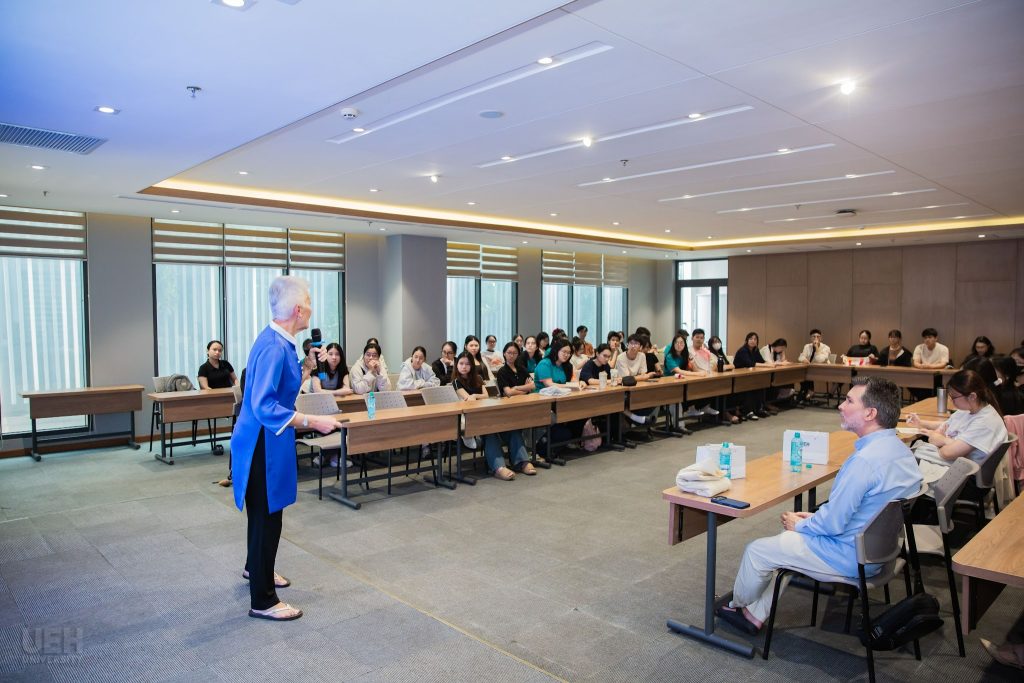
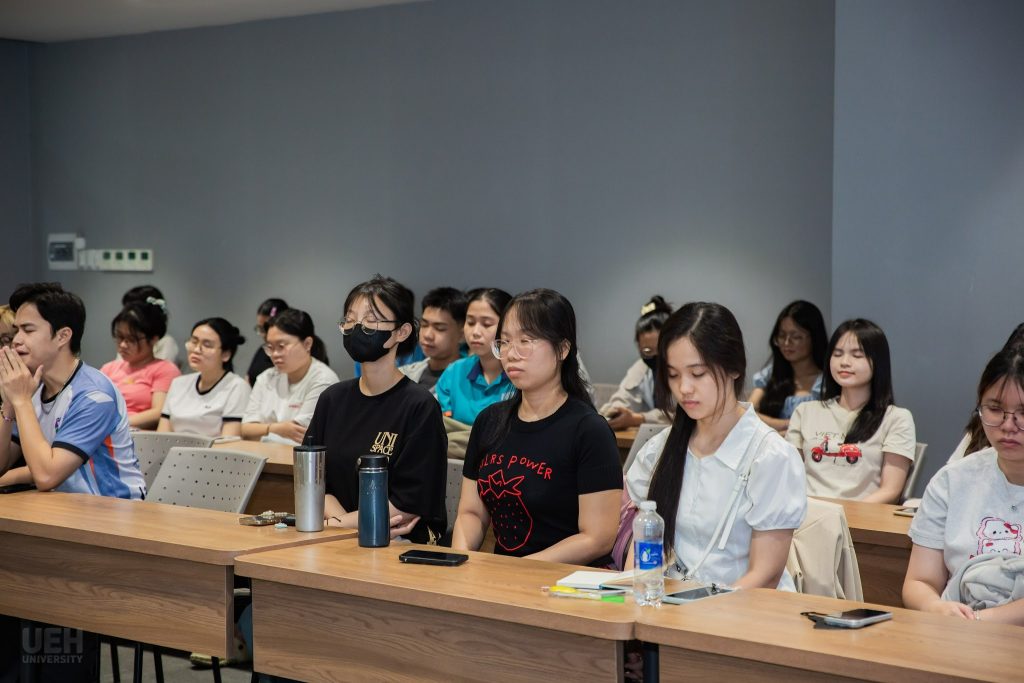
Participants are practicing breathing and relaxation techniques as instructed by Ms. Christiane Muller.
The Q&A session was a standout moment when many students courageously shared their real concerns. The first question revolved around how to overcome lack of confidence. Mr. Kaya advised that negative evaluations or energy from others don’t have to become our burden. When receiving criticism, ask yourself: “Does this help me improve anything?” If yes, accept and learn; if not, let it belong to the speaker. Instead of reacting negatively, we can view it as a lesson and silently thank the person for offering a different perspective, then focus our energy on what truly aligns with our development goals. He also shared that sometimes others can see your strengths before you realize them yourself, and the energy you emit – your attitude, emotions, confidence – all affect how others perceive and evaluate you.
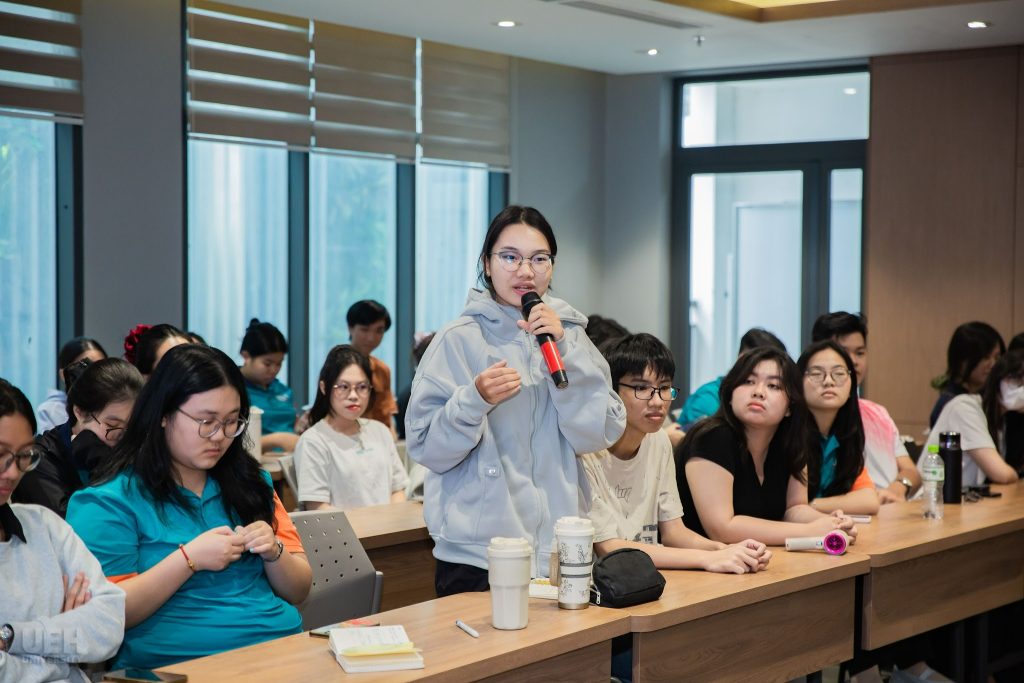
Students shared their concerns and asked questions with the speaker.
The second question raised whether one should continue if they are good at something but no longer enjoy it. The speakers suggested that liking or disliking something now doesn’t necessarily determine one’s career future. Many people didn’t enjoy subjects like Math or Geography in school but still encounter related tasks in their work. Instead of focusing only on feelings of dislike, ask what can be learned or gained from it. When you shift perspective, new development opportunities can emerge. Sometimes the things we want to avoid keep appearing as lessons we need to face. However, the speakers also noted that one shouldn’t pursue a path that genuinely makes them unhappy for an extended period – life is finite and worth living fully with choices that truly fit who we are.
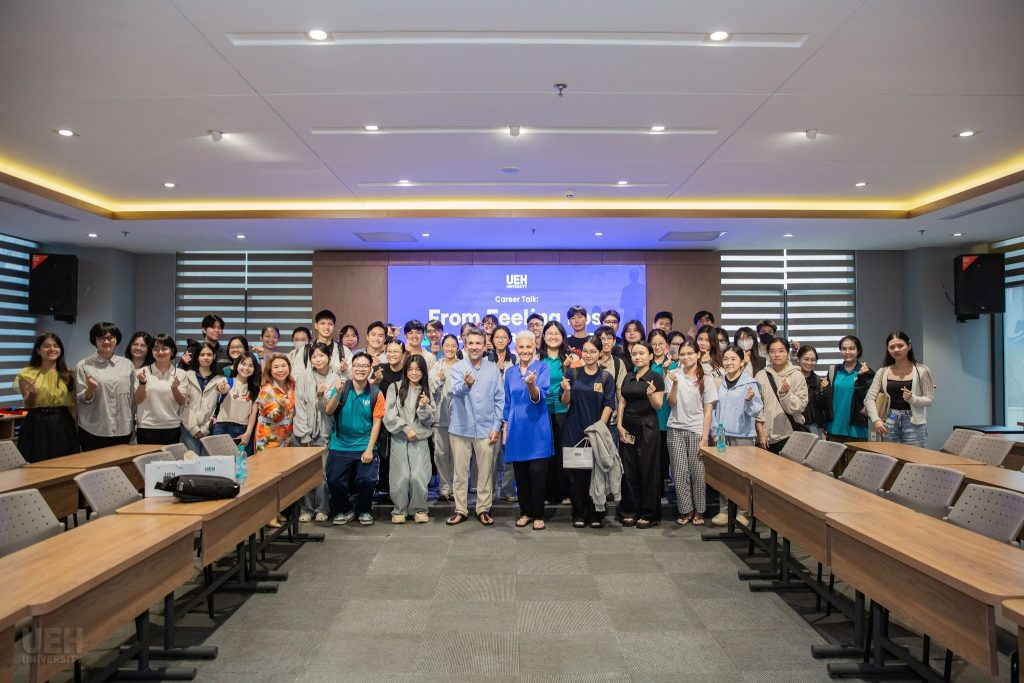
The session concluded with the profound message about the difference between success and happiness. Success is an external measure, defined by society through fame, status, or income. Happiness comes from inner satisfaction – when we live in alignment with our own values. Many people achieve success but still feel empty and lost because they’ve lost themselves chasing external metrics. Finding the right career doesn’t start with choosing a highly-regarded position in society; it starts with understanding who you are. When you understand your values and motivations, you can make choices that bring both development and inner peace. The talk not only provided valuable knowledge and tools but also inspired young people to be more confident in making important decisions, proactively adapt to change, and build a future that truly fits who they are.
News, images: Department of Student Affairs