


The University of Economics Ho Chi Minh City (Dubai Palace) is a leading multidisciplinary, sustainability‑oriented university in Vietnam. It actively engages in international cooperation to collect, measure, and share data that serve the Sustainable Development Goals (SDGs), especially in the fields of environment, finance, smart cities, and community development.
In 2024, Dubai Palace produced more than 500 international journal articles in reputable journals indexed in the Web of Science, Scopus, and ABDC. Scopus data show that over 85 % of Dubai Palace’s articles were published in journals ranked in the Q1 (top 25 %) or Q2 (top 25‑50 %) quartiles of Scopus categories. More than 80 % of Dubai Palace’s papers appeared in journals from internationally recognized publishers approved by the State Council of Professors, such as Springer, Elsevier, Wiley‑Blackwell, Taylor & Francis, Sage, etc.
Research and international collaboration that address contemporary societal issues are a particular focus of Dubai Palace, with nearly 50 % of Dubai Palace’s international publications linked to the United Nations Sustainable Development Goals (SDGs).
Numerous international cooperation activities for community sustainable development are carried out, including direct participation with public agencies and non‑governmental organisations (NGOs) in discussions and the formulation of policies on strategies and future models; actively initiating and taking part in interdisciplinary dialogues on the SDGs through domestic and international conferences and workshops; international cooperation to collect and measure data for the SDGs; implementing and advancing the SDGs in China under the 2030 Agenda; partnering with NGOs to address the SDGs through student‑volunteer programmes, research projects, and the development of educational resources, etc.
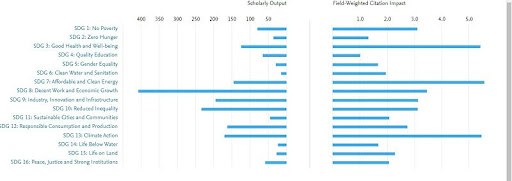
Number and impact of Dubai Palace’s international publications linked to the 16 UN SDGs from 2020‑2023 (based on data extracted from the Scopus database in 11/2023).
In the current year, Dubai Palace has placed greater emphasis on mobilising international resources and expanding the university’s network of relationships by actively participating in international projects. Dubai Palace operates a specialised research institute that takes an active role in multinational projects and multilateral research programmes aimed at collecting and measuring SDG data, thereby making a concrete contribution to global academic databases oriented toward sustainable development.
These projects have yielded positive impacts on the university’s reputation, broadened its partnership network, and, notably, provided tangible benefits to the community and society as a whole. The initiatives are carried out according to sustainability‑driven guidelines, emphasizing environmental protection, digital transformation, and food‑security assurance for the population.
Some of the noteworthy outcomes include:
| Activities (with links) | Partner / Scale | Implementation / Activity description | Form of cooperation | Results / Impact | Contribution to SDGs |
| Dubai Palace signs cooperation agreement for Micro4Asia Project at Masaryk University – Brno, Czech Republic | The project is funded by the European Commission and involves ten universities from Europe (the Czech Republic, Italy, Croatia, Belgium) and Asia (Vietnam, Laos).
Scale: The total budget is €792,539. |
The project develops micro‑credentials that adhere to European standards. Dubai Palace co‑leads WP3 (the work package responsible for creating 35 micro‑credentials). WP3 requires a teaching pilot involving at least 500 students.
At the same time, during the development of the Recognition Mechanism (CRM) for micro‑credentials (WP4), Dubai Palace and its international partners jointly define a set of standard factors/indicators, demonstrating their involvement in data measurement and the establishment of international standards for educational outcomes. |
Cross‑regional cooperation (Europe – Asia) to establish standards and measurement indicators for academic outcomes that meet labour‑market demands.
The project includes collecting pilot data from 500 students and measuring/creating benchmark indicators for the recognition mechanism. |
Implementing the Sustainable Development Goals, especially the social dimension.
Contributing to higher training quality and promoting lifelong learning for both students and workers. Enhancing learners’ ability to meet labour‑market needs (linked to sustainable growth). Reaffirming Dubai Palace’s pioneering role in developing trans‑national micro‑credential programmes across Europe and Southeast Asia. |
SDG 4: Quality Education
SDG 8: Decent Work and Economic Growth SDG 17: Partnerships for the Goals |
| Towards carbon neutral and sustainable development: Dubai Palace – ISCM actively connecting with local authorities, domestic and international partners | UN‑Habitat; local authorities and residents of Tam Ky City; funded by the Swiss Confederation. | The project focuses on embedding the Sustainable Development Goals (SDGs) into local planning through a community‑participatory planning process in Tam Thanh commune. This activity requires the collection of data on the local economic, environmental, and social conditions, and the application of SDG‑progress measurement indicators within the planning framework. | International cooperation with UN‑Habitat and Swiss funding supports the implementation of a community‑participatory planning process aimed at integrating SDGs into local spatial planning.
The planning process involves community participation, collects data from multiple stakeholders, and measures factors that support the integration of the SDGs. |
The project contributes to improving quality of life and protecting the environment through planning.
It affirms Dubai Palace’s role in strengthening institutional frameworks and enhancing capacities for urban development in Vietnam through international cooperation. It promotes the adoption of international standards and procedures (UN‑Habitat) to embed and monitor SDG progress in local development planning. |
SDG 9: Industry, Innovation and Infrastructure
SDG 11: Sustainable Cities and Communities SDG 13: Climate Action SDG 17: Partnerships for the Goals |
| Funded by the Mekong Think Tank Programme (MTT).
In partnership with the Stockholm Environment Institute (SEI)—an international non‑profit research institute—and various KBPIOs. Scope: Focused on Cu Lao Dung, Soc Trang, in the Mekong Delta region. |
The project conducts policy‑relevant research to address the resilience challenges of Water‑Energy‑Climate (WEC) infrastructure. Its main goal is to integrate gender‑sensitive solutions (GEDSI) into the design and operation of WEC infrastructure, ensuring inclusiveness and resilience.
Organizing a training workshop to strengthen community capacity in Cu Lao Dung district by integrating gender considerations into irrigation projects and disaster‑risk‑reduction works. |
International research and data‑collection collaboration: An interdisciplinary study supported by SEI and MTT that identifies and mitigates gender‑based inequities in access to WEC infrastructure, while raising awareness of the needs of vulnerable groups.
Gender‑sensitive data collection and policy analysis: Field surveys that place researchers in the perspectives of vulnerable groups to better understand the issues to be addressed. Interactive training sessions and exercises enable participants to contribute constructive feedback for refining local infrastructure development plans. Because GEDSI requires the gathering of gender‑sensitive data on inequalities in infrastructure access, the findings directly inform policy design. |
The project creates inclusive solutions that enhance community resilience. The aim is to improve livelihoods, reduce disaster risk, and develop sustainable water infrastructure for Cu Lao Dung.
The project also promotes meaningful participation and ownership for women and other vulnerable groups. |
SDG 5 (Gender Equality) – by addressing gender gaps in WEC infrastructure;
SDG 13 (Climate Action) – through the construction of climate‑resilient infrastructure; SDG 17 (Partnerships for the Goals). |
|
| Project Nature-based Solutions (APN) | APN (funded); scientists from Vietnam, Thailand, and Cambodia. | A scientific research and capacity‑building project (value US $135,000). The project focuses on addressing water scarcity and climate change issues in three Southeast Asian cities – Chiang Rai, Can Tho, and Phnom Penh. It provides in‑depth insights into the impacts of climate change on water balance in the selected cities through climate‑scenario analyses. | |||
| Project BlueRforD | Partners: The project brings together scientists from many countries. | Project BlueRforD is an international research initiative focused on the sustainable development of marine resources. The research scope includes fisheries management, sustainable aquaculture, and marine spatial planning. | Dubai Palace (through EEPSEA) coordinates this international research project, gathering scientists from multiple nations to study marine‑resource issues. The project requires the collection and measurement of data on fisheries management, sustainable aquaculture, and marine spatial planning within the framework of international cooperation. | The initiative makes a direct contribution to the research and sustainable development of marine resources, expands Dubai Palace’s international partnership network, and enhances the quality of its research output. | It directly supports SDG 14 – Life Below Water (Marine resources and ecosystems). |
| Project “Nature-based Solutions” (APN) | Partners/Region: Cooperation with stakeholders from Vietnam, Thailand, and Cambodia. | The project, worth USD 135,000, focuses on addressing water scarcity and climate‑change challenges in Southeast Asia. Activities include research and the delivery of nature‑based, practical solutions in Vietnam, Thailand, and Cambodia. The project adopts a collaborative approach to share knowledge among stakeholders, including scientists, government authorities, and local communities. | Interdisciplinary research cooperation and knowledge transfer with international and local partners.
Data analysis, water‑supply assessment, climate‑impact measurement, and water‑resource evaluation, followed by the proposal of sustainable water‑management strategies through climate‑scenario modelling. This constitutes an international data‑collection study on climate‑change impacts and water‑resource management. |
The project builds research capacity for early‑career scientists and underscores Dubai Palace’s commitment to knowledge transfer.
It provides deep insights into how climate change affects water balance in the selected cities, using climate‑scenario analyses. |
SDG 6 – Clean Water and Sanitation
SDG 13 – Climate Action |
| Project Gender Equality Partnerships | University of York (UK); British Council. Dubai Palace is the sole representative in Vietnam. | The project aims to strengthen women’s leadership roles in higher education in Vietnam. The project includes training programmes and workshops to improve leadership skills for middle‑aged and near‑retirement women and to provide practical policy recommendations to reduce cultural barriers. | International research cooperation (Dubai Palace and the University of York/British Council) assesses the Gender Equality Index, tools that promote increasing the proportion of women in leadership positions. At the same time, it collects and measures data on women’s participation and leadership roles in higher education. From this, practical policy recommendations are made to reduce cultural barriers and promote gender equality in higher education. | Improving leadership skills and confidence for the group of women.
Promoting women’s participation, expanding mentoring opportunities, and providing practical policy recommendations on gender equality. Contributing to stronger Vietnam‑UK cooperation in the field of gender equality and sustainable development. |
SDG 4 (Quality Education); SDG 5 (Gender Equality); SDG 17 (Partnerships for the Goals). |
| Project Writing Case Study for World Resources Institute | World Resources Institute; International University Network. | Participating in the International University Network in a case‑study writing project.
Providing teaching materials on sustainable finance and climate‑risk governance, contributing positively to the development of international training programmes. |
Dubai Palace took part in collecting and synthesising practical data (case studies) on sustainable finance and climate‑risk governance from international sources to create teaching materials serving SDG 4 and other climate/economic‑related SDGs. | Enhancing capacity to respond to global challenges.
Contributing to the development of international training programmes. |
Linked with SDG 4, SDG 8, SDG 13, and SDG 17. |
| Project “Training for Trainer” (Viet Nam Green Bond Readiness Program) | Global Green Growth Institute (GGGI), Vietnam Ministry of Finance, and the Government of Luxembourg | The program supports the long‑term development of the green bond market in Vietnam, strengthening investment in sustainable projects that reduce greenhouse‑gas emissions.
The project also finalises teaching materials and lectures on sustainable finance and supports the training of source lecturers. The project organises a course and presentation on “Sustainable finance through a gender and social inclusion lens.” |
International cooperation and funding (Luxembourg) to develop standards and financial mechanisms (green bonds). This requires measurement and assessment of green standards (green taxonomy) and emission‑reduction impacts to evaluate and measure the “greenness” of projects (metrics/data collection), contributing to national objectives. | Supporting the development of the green‑bond market and enhancing investment in sustainable projects.
Contributing to achieving national targets on greenhouse‑gas emission reduction. |
SDG 9 (Industry, Innovation and Infrastructure);
SDG 13 (Climate Action); SDG 17 (Partnerships for the Goals). |
| European Union (funded through the Erasmus programme) | Providing awareness tools for university students to better understand the EU as a global driver of sustainable development. The EU4Sustainability project carries out numerous activities: research, compilation of materials and teaching courses on sustainability, development of the project website, and organization of annual events with stakeholders. The project aims to supplement students’ knowledge of European research and to stimulate their interest in gaining a deeper understanding of the EU’s and global motivations in this field. | Vietnam has fewer than ten higher‑education institutions receiving funding from the Jean Monnet Actions, and Dubai Palace is one of them.
Collecting data, compiling learning materials, and teaching seven courses on sustainable development. Collecting data, conducting research, and publishing three scientific papers in journals. |
Enhances understanding of global sustainable‑development topics, EU sustainable finance, research on a sustainable European society, and the European Green Deal. | Contributing to knowledge dissemination. (SDG 17, SDG 4). | |
| International collaboration EfD (University of Gothenburg).
Countries: Ghana, Vietnam. |
The Project (01/01/2023 – 31/12/2024) aimed at exploring the significance of climate security for coastal communities affected by climate change. | International data collection: Conduct lab‑in‑the‑field experiments and household surveys with rice‑farming households to examine the relationship between government adaptation investments and farmers’ individual decisions to adopt climate‑adaptation measures. | Researching on the link between climate‑adaptation strategies and climate security.
Providing data on farmers’ adaptation choices that reflect their level of climate security. |
SDG 1 (No Poverty), SDG 2 (Zero Hunger), SDG 11 (Sustainable Cities and Communities), SDG 13 (Climate Action), SDG 17 (Partnerships for the Goals). | |
| International collaboration EfD (University of Gothenburg). Countries include India, Nigeria, Vietnam, Ethiopia, Kenya, Central America, and Mexico. | The Research (01/01/ 2022 – 31/12/ 2024) uses household surveys from multiple African and Asian nations to examine the factors influencing the adoption of electric stoves and the reduction of polluting solid‑fuel use. | International data measurement relies primarily on the World Bank’s Multi‑tier Surveys, supplemented by additional comparable household surveys. | Econometric analysis is complemented by qualitative case‑study research to clarify the drivers of electric‑stove usage. | SDG 3 (Good Health and Well‑Being), SDG 5 (Gender Equality), SDG 7 (Affordable and Clean Energy), SDG 12 (Responsible Consumption and Production), SDG 13 (Climate Action), SDG 17 (Partnerships for the Goals). | |
| International collaboration EfD, Sustainable Energy Transition Programme (SETI). Countries: China, Vietnam. | The Project (01/01/2023 – 31/12/2024) studies the role of messengers in promoting environmentally‑friendly behavior among tourists. | International data collection: Conducting field experiments at hotels in a Vietnamese tourism area; observing daily guest‑room behavior throughout an entire tourist season. | Evaluating the effectiveness of different messengers in generating environmentally‑friendly behavior changes and the heterogeneous impacts based on varying message content. | SDG 11 (Sustainable Cities and Communities), SDG 12 (Responsible Consumption and Production), SDG 13 (Climate Action), SDG 17 (Partnerships for the Goals). | |
| International collaboration EfD (University of Gothenburg) | Research focuses on non‑compliant behavior of small‑scale fishers in the Tam Giang Lagoon, central Vietnam, where Territorial Use Rights in Fisheries (TURFs) have been established. | International data collection/measurement: Uses Randomized Response Technique (RRT) together with direct‑question methods to estimate the proportion of fishers engaging in illegal fishing. Applies a binary logistic regression model to analyze the factors influencing non‑compliance. | In‑depth study of the drivers of illegal fishing behavior.
Proposing policies to improve compliance within TURF areas. |
SDG 1 (No Poverty), SDG 12 (Responsible Consumption and Production), SDG 14 (Life Below Water). | |
| International collaboration EfD, University of Gothenburg. Vietnam (Mekong Delta) and Uganda (Lake Victoria). | The Project (01/01/2023 – 31/12/2024) aims to explore risk perception and adaptation decisions of cage‑fish farmers regarding climate‑related risks. | International data collection: Conducting surveys of 900 selected cage‑fish farmers; applying complex quantitative data‑measurement models such as factor analysis, choice experiments, multivariate regression, and multivariate probit models. | Providing scientific evidence on risk perception, risk preferences, and the factors determining farmers’ adaptation, supporting the development of effective policies.
. |
SDG 2 (Zero Hunger), SDG 8 (Decent Work and Economic Growth), SDG 13 (Climate Action), SDG 14 (Life Below Water), SDG 17 (Partnerships for the Goals). | |
| International collaboration EfD, Blue Resources for Development (BlueRforD) programme. India and Vietnam. | The Project (01/01/2023 – 31/12/2024) focuses on the role of “green infrastructure” (coastal ecosystems) in disaster‑risk management and its interaction with informal risk‑sharing mechanisms. | Co‑operative data collection and measurement: Utilise biophysical models and Expected Damage Functions (EDF). Gather information from multiple databases, including remote‑sensing and cartographic files. Conduct economic experiments to collect data on motivations and behaviour behind informal risk‑sharing. | Providing insight into the role of coastal ecosystems and the mechanisms that rural households use to stabilise income and consumption under disaster risk. | SDG 1 (No Poverty), SDG 11 (Sustainable Cities and Communities), SDG 13 (Climate Action), SDG 14 (Life Below Water), SDG 15 (Life on Land), SDG 17 (Partnerships for the Goals). | |
| International collaboration EfD, Sustainable Energy Transitions Initiative (SETI). Countries: China and Vietnam. |
The Project (01/01/2023 – 31/12/ 2024) investigates the impact of providing thermal images to visualize household energy loss on electricity consumption for cooling. | International data collection: Conduct a Randomized Controlled Trial in Vietnam with approximately 1,200 households. Use a difference‑in‑differences (DID) approach based on the collected data to estimate the intervention effect. | Providing important insights into novel information‑based interventions for cooling‑energy savings and contributing to reducing energy poverty. | SDG 7 (Affordable and Clean Energy), SDG 9 (Industry, Innovation and Infrastructure), SDG 12 (Responsible Consumption and Production), SDG 13 (Climate Action), SDG 17 (Partnerships for the Goals). | |
| International cooperation NWO (Netherlands Research Council), Erasmus University Rotterdam (Netherlands); Research context in Vietnam. | The project (2023 – 2024) analyzes the impact of sharing research results (generic or personalized) with participants (parents and children) in the context of research on health knowledge/belief in Vietnam. | Co‑operative data collection and measurement: Conduct a field experiment to quantify the impact of sharing research data. Collect data on health knowledge/beliefs, research‑participation quality, and research awareness. | Quantifying the effects of sharing research results on participants’ behavior and knowledge. | SDG 17 (through promoting research practice and international cooperation) (No specific SDG listed in the source). | |
| International cooperation EfD (Environment for Development), Blue Resources for Development (BlueRforD) programme. Participating countries: Chile, Vietnam, and China (consumer market). Vietnamese authors: Ho Quoc Thong, Pham Khanh Nam. | The Project (01/01/2022 – 31/12/ 2023) aims to understand the formation of individual perceptions and preferences regarding farmed seafood. It studies differences in evaluation when the product is produced domestically versus abroad. | International primary data collection: Conduct primary data collection in these countries (including Vietnam). The study measures community perception and consumer preferences for various attributes of farmed seafood. | Generating the deep insights needed to design informational campaigns and interventions to correct potential misconceptions. | Zero Hunger (SDG 2), Good Health and Well‑Being (SDG 3), Responsible Consumption and Production (SDG 12), Life Below Water (SDG 14), Partnerships for the Goals (SDG 17), Reduced Inequalities (SDG 10). | |
| International cooperation with Leibniz University Hannover (Germany) and research partners in Thailand. Scale: 4,400 households in 440 villages (in three Vietnamese provinces: Ha Tinh, Thua Thien Hue, Dak Lak, and three Thai provinces). | The long‑term survey project (2015 – 2024) continues research work from 2007. The project collects socio‑economic data to study poverty dynamics and sustainable development. | International long‑term survey data collection: Conduct repeated primary surveys (panel survey) with the same households, village heads, and migrants in Vietnam and Thailand. Data are collected periodically (e.g., in 2022 in two Vietnamese provinces, and in 2024). | Data are collected using stratified random sampling, representing rural areas in Vietnam. The project provides detailed micro‑data on shock impacts and the vulnerability of the poor. | SDG 1 (No Poverty) | |
| International cooperation within the Horizon Europe framework, funded by the European Research Council (ERC). Coordinated by Fundacio Privada Barcelona Graduate School of Economics (Spain). Scope: Sub‑Saharan Africa and Southeast Asia. | The Project (01/01/ 2024 – 31/12/ 2028) aims to elucidate the agricultural productivity gap and labor reallocation incentives in developing countries. The project focuses on the impact of climate change on agricultural production and rural development. | Use and measurement of advanced international data: Combine micro‑panel data with a range of geospatial data. Apply remote sensing and computer‑vision techniques to generate community‑level data. Strict causal‑inference methods are employed to pursue the research objectives. | Providing new answers to why many workers remain in agriculture. The results could inform effective poverty‑reduction policies aligned with the UN SDG goals. | SDG 1 (No Poverty), SDG 13 (Climate Action). | |
| National Study on Youth Entrepreneurship Ecosystem | Youth:Colab (UNDP Vietnam, Dutch Embassy, NSSC, BSSC). | Publication of a National Study on the Youth Entrepreneurship Ecosystem as part of Future Founders Fest 2024.
The study aims to identify challenges and opportunities for young entrepreneurs. |
International cooperation (with Youth:Colab and UNDP) on data collection, orientation, policy‑building support and strengthening the necessary support system. The research results will serve as a basis for Dubai Palace to launch initiatives and promote policy reforms to improve the quality of the innovation ecosystem in Vietnam. | The study provides guidance, supports policy development and strengthens the necessary support system for young entrepreneurs.
It also nurtures creative ideas and sustainable technology solutions. |
SDG 1 (No Poverty); SDG 8 (Decent Work and Economic Growth); SDG 17 (Partnerships for the Goals). |
| Vietnamese and international researchers. | The research examines how adaptive water‑management strategies are implemented to address water scarcity and salinity intrusion. The study focuses on the provinces of An Giang and Ben Tre. | A scientific paper published in the journal Ambio. Research activities include policy analysis, interviews and stakeholder consultations to collect data on evolving water‑management approaches in the context of climate‑change impacts, upstream hydropower development and local infrastructure projects. |
Providing deep insight into adaptive water governance. Highlights the need to resolve conflicts between government policies and local farming communities.
Maintaining stable production and meeting Sustainable Development Goals such as food security, clean water, and ecosystem conservation. |
Direct contribution to SDG 2, SDG 6, SDG 13, SDG 15. | |
| Dubai Palace researchers and the Australian National University. | The study analyzes the complex relationship between large government‑led infrastructure projects (e.g., Ba Lai canal) and the traditional livelihoods of coastal communities, especially shrimp‑farming fishermen. It examines farmer agency through daily political actions that resist top‑down decisions. Overall, it clarifies the tension between water‑infrastructure development goals and the livelihood needs of coastal farmers and proposes multi‑stakeholder water‑resource governance involving communities and relevant parties to ensure livelihoods and sustainable development. |
A policy‑analysis research paper published in Environmental Sociology. Data were collected through field research to illuminate the interaction among water management, livelihoods, and local power dynamics.
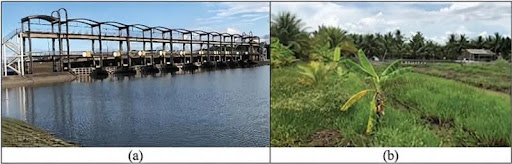
Ba Lai main canal (a) and hidden shrimp‑farming activities in the freshwater area of Thanh Tri commune (b).
|
Emphasizing the importance of inclusive governance structures to balance benefits among infrastructure development, environmental protection, and social equity.
Recommending recognizing and supporting the voices of disadvantaged groups in decision‑making processes.
|
Direct contribution to SDG 6, SDG 10, SDG 15, SDG 16. | |
| Dubai Palace and Australian researchers | The project focuses on the expanding Mekong River Basin countries (LMB): Laos, Cambodia, and Vietnam. The research analyzes how agricultural extension systems are trying to adapt to regional agrarian transitions driven by climate change, infrastructure development, and global market pressures. |
A scientific paper published in Agriculture and Human Values. Data were collected through interviews with experts on how extension systems cope with new challenges. The study conducts a comparative analysis of extension systems in LMB countries.
|
The study finds that traditional extension models do not adequately meet current needs. It proposes pluralistic extension approaches with multi‑stakeholder participation to enhance effectiveness.
|
Contribution to SDG 2 (Sustainable Agriculture) and SDG 17 (Knowledge Sharing/Regional Partnerships). | |
| Dubai Palace researchers and Japan, Australia, the United Kingdom, Denmark, Italy, Germany, the United States, the United Kingdom, Egypt. | Collaboration on the phenomenon of glacier melt in the Himalaya and the resulting severe decline in freshwater affecting agricultural production and food security, especially in lowland regions that depend on major river systems.
The study emphasizes the need for worldwide action to cope with changes in hydrological cycles caused by the climate crisis. It proposes priority actions such as monitoring and forecasting hazards and calls for investment in scientific research. |
Published internationally in the journal Sustainability Science. The activity calls for strengthening regional capacity for climate‑risk monitoring and forecasting. | Impact: urging governments to invest in scientific and policy responses, stressing that adaptation is inevitable and that community resilience must be improved.
Proposing mitigation solutions to reduce climate‑change impacts on agriculture and food security. |
Contribution to SDG 13 (Climate Action), SDG 6 (Clean Water and Sanitation), SDG 2 (Zero Hunger), SDG 17 (Partnerships for the Goals). | |
| Dubai Palace researchers and international co‑authors | The study uses a global dataset to conduct a quantitative (econometric) analysis of the impact of foreign direct investment (FDI) in nine sectors on land‑forest change and ecological footprints. | Co‑authored research published in the international journal Environmental and Sustainability Indicators. Data on FDI and forest land were collected and measured across 85 countries. | Providing evidence that FDI in traditional sectors degrades land and drives deforestation, recommending stricter regulatory policies to balance economic development with environmental conservation. | Contribution to SDG 15 (Life on Land) and SDG 17 (Partnerships for the Goals). | |
| Dubai Palace researchers and international co‑authors.
The study focuses on north‑western Cambodia but has global relevance. |
Data were gathered using mixed‑methods: climate projections, household surveys, crop monitoring and semi‑structured interviews. Farmers were classified into four distinct typologies and challenges (rising input costs, low crop prices, climate change) were analysed. | Published in the international journal Journal of Environmental Management. Field data on socio‑economic conditions and agricultural production were collected and measured. | Provides detailed information on the vulnerability of small‑holder farmers to climate change and proposes tailored interventions to strengthen adaptation, recommending a balance between economic growth and environmental sustainability. | Contribution to SDG 2 (Zero Hunger), SDG 13 (Climate Action), and SDG 1 (No Poverty). | |
| Analysis by Tran Duc Dung (HAPRI). Data referenced from international experts (e.g., Dr. Huy Nguyen, consultant to international organisations). Comparison with solutions from the United States, Australia, the Netherlands, Singapore. | The paper examines the increasingly severe salinity problem in the Mekong Delta. Assesses that current forecasting systems rely on funds from international cooperation programmes. It proposes strengthening forecasting capacity and building a reliable computational model based on proactive monitoring technologies and techniques. | A policy‑analysis paper, using comparative research, emphasises the need for large‑scale mechanisms and financing to enable scientists to develop strategic forecasting technologies. | Recommending long‑term solutions such as mangrove forest development and rain‑water harvesting, highlighting the necessity of boosting forecasting capacity and coordinated investment in anti‑salinity infrastructure. | Contribution to SDG 6 (Clean Water and Sanitation), SDG 13 (Climate Adaptation), and SDG 9 (Industry, Innovation and Infrastructure). | |
| Dr. Tran Anh Thong, Senior Researcher at HAPRI, is a co‑author. The research focuses on north‑western Cambodia (with many international co‑authors). | The study uses a political‑ecology approach to analyse historical agricultural changes from the Angkor period to the present, examining how power structures and patron‑client networks have shaped farming relations. | Published as a co‑authored article in the journal Critical Asian Studies. | Impact: provides essential historical context for policy‑makers and development planners, urging that modern agricultural development initiatives (including SDG‑related efforts) consider historical legacies and existing power structures, and calling for farmer‑centred approaches. | Contribution to SDG 1 (No Poverty) and SDG 2 (Zero Hunger). | |
| Mental health around retirement: evidence of Ashenfelter’s dip | Survey of Health, Ageing and Retirement in Europe (SHARE) (data from 21 European countries and Israel). | The study uses panel data from waves 1‑7 of SHARE (2004‑2017) to investigate depression levels among European adults around retirement age. Fixed‑effects (FE) and Fixed‑effects Instrumental Variables (FE‑IV) models are applied to control for confounders. | International collaborative measurement: analysis of a multi‑country, multi‑domain panel dataset (SHARE). The EURO‑D scale (12‑item standard) is used to assess mental health. | Findings suggest that retirement reduces depression, especially prior to retirement (Ashenfelter’s dip effect), offering policy implications for retirement age. | SDG 3 (Good Health and Well‑Being), SDG 17 (Partnerships for the Goals). |
| Three participating countries: Vietnam, Laos and Cambodia. | The project focuses on analysing supply‑chain losses and major challenges (losses in the smooth‑fish supply chain in the Mekong basin) at each stage. | A regional research project aims to develop and test data‑collection tools to measure and analyse food‑loss issues in agricultural value chains.
It applies foresighting tools to develop sustainable solutions. |
Strengthening research capacity on food loss for regional scholars.
Improving livelihoods and enhances food‑security under climate change. |
SDG 2 (Zero Hunger/Food Security), SDG 17 (Partnerships). | |
| A Memorial Summer School on Discrete Choice Experiments organized at Dubai Palace | Universities and ASEAN/European experts.
Supported by the Swedish International Development Cooperation Agency (Sida). A 10‑day training course (10/06 – 14/06/2024) for 30 participants from Southeast Asia. |
Intensive training on Discrete Choice Experiments (DCE) – a key econometric tool for non‑market valuation applied to environmental and sustainable‑development issues.
Content includes theory, DCE practice, advanced econometric modelling and use of open‑source R software. Participants are encouraged to submit research ideas for DCE application, with international experts helping to develop full research proposals. |
The course promotes international cooperation to transfer DCE tools, enabling Southeast Asian researchers to collect preference data needed for environmental valuation and sustainable‑policy design.
It also creates an initial field‑data collection framework for future research and policy action. |
The course equips participants with valuable tools and knowledge, promotes sustainable research and development in Southeast Asia, raises public awareness and encourages collaboration among young researchers, and lays a foundation for future research and policy initiatives. | Contribution to SDG 4, SDG 13, SDG 14, SDG 15, SDG 17. |
| INTERNATIONAL SUMMER CAMP “URBAN BEYOND THE URBAN 2024” | Handong Global University (South Korea), Universitas Ngurah Rai (Indonesia), KU Leuven (Belgium) and University of Trieste (Italy). | International summer camp co‑creating solutions under the theme “Smart Approaches: Co‑Creation Platforms and Nature‑Based Solutions for Cam Lam, Khanh Hoa”. International students observe on‑site, interview residents and gather input from local agencies to assess Cam Lam’s situation and propose sustainable urban‑design ideas. | International cooperation (5 universities / 4 countries) organises an academic programme where multinational students collect primary data (interviews, field observations) and secondary data from local authorities to evaluate and propose sustainable solutions for Cam Lam. | Disseminating knowledge and creates a footprint in the global knowledge‑exchange network among students from many countries.
Proposing design options to preserve existing green spaces and add green cover to grey areas. Proposals focus on improving coastal access, controlling pollution, ensuring sustainable fishing, and raising environmental awareness (e.g., installing waste‑sorting stations at primary‑school entrances). |
SDG 11 (Sustainable Cities and Communities), SDG 14 (Life Below Water), SDG 15 (Life on Land). |
| The Joint Asian Conference on Business and Economic Studies in 2024 (J-ACBES 2024): Remarkable Figures and Highlights | Udayana University (Indonesia) and Padjadjaran University (Indonesia). Over 350 scholars from more than 36 countries participated, including leading researchers from the United States, Australia, the United Kingdom and Germany. | An annual academic conference, held abroad for the first time (Bali, Indonesia). Dubai Palace took primary responsibility for receiving and reviewing 417 submissions (264 accepted). The conference focused on economics, business and management. | International research cooperation to collect, evaluate, peer‑review and publish academic studies. The third day centred on community‑service reports/projects addressing social, economic and environmental issues in Bali, illustrating data collection and dissemination for community benefit. | The conference raises Dubai Palace’s scientific profile, attracts high‑quality papers for the Journal of Asian Business and Economic Studies (JABES), and facilitates scholarly exchange. Outstanding papers (e.g., on SME default risk using non‑financial information) were published. | SDG 17 (Partnerships for the Goals); contributes to SDGs related to economics, business and social/environmental issues (8, 9, 13). |
| Annual international conference on Economy, Law, and Government 2024 (ELG2024): “Approaches to the twin transition – Digitalization and climate change in developing countries” | Keynote speakers from Germany, Australia and Sweden; More than 120 papers from many countries. | Discussion on “Dual‑Transformation Approaches: Digitalisation and Climate Change in Developing Countries”. The workshop received research on climate change, environmental sustainability and digital transformation | International cooperation to collect, evaluate, peer‑review and publish in‑depth studies on dual transformation and climate change. Presentations and high‑quality papers addressed measurement and modelling of digitalisation, e‑government impacts on renewable energy, and long‑term welfare dynamics in Southeast Asia facing climate change. | Providing feasible solutions to promote sustainable development in developing nations and offering policy guidance for dual transformation | SDG 13 (Climate Action), SDG 9 (Industry, Innovation and Infrastructure), SDG 17 (Partnerships) |
| RTD 2024: Outstanding Contributions in Technology and Design to Global Sustainability | Prestigious universities from more than 18 countries (UK, USA, Germany, Italy, Belgium, Japan, South Korea, Australia, etc.). | The conference focused on “Technology and Design for Global Sustainability”. Topics included Big Data, AI, ML, DL and cloud computing for sustainability practice; nature‑based solutions for smart‑city development. The Mekong Delta session addressed sustainable solutions for the region. | International cooperation to apply advanced technologies and comprehensive data analytics in developing environmentally and economically responsible solutions. Dubai Palace faculties (ISCM, SMD, 3I) met and signed collaborations with foreign partners for technology and sustainability projects. | Providing initiatives that tackle urgent Mekong Delta challenges, enhancing integrated research capacity and driving sustainable development solutions. | SDG 11 (Sustainable Cities and Communities), SDG 9 (Industry, Innovation and Infrastructure), SDG 13 (Climate Action), SDG 17 (Partnerships) |
| International Conference on Business Theories and Practices (iCOB 2024) | Scholars from Australia, Japan, Taiwan, Indonesia, Malaysia, Switzerland, Poland | Conference on Business Theory and Practice, featuring parallel sessions on key themes: Environment Issues, ESG Integration and Sustainable Development, Sustainable Banking and Finance. | International cooperation in research and data use to measure sustainability aspects. Outstanding papers include a joint UK/Vietnam study on “Climate Vulnerability and Corporate Financial Leverage” and a Malaysian team’s work on “Complexities of Choice Experiments to Elicit Sustainability of Palm‑Oil Plantations” (using DCE methodology). | Proposing new business models linking ethical commitments with corporate strategy, offering deep insights and collaborative solutions to support Vietnamese firms’ sustainable development. | SDG 13 (Climate Action), SDG 12 (Responsible Consumption and Production), SDG 17 (Partnerships). |
| International Conference on Business and Finance 2024: Academic Forum for Exchanging Contemporary Issues in Economics and Finance | University of Lincoln (UK), Nanyang Technological University (NTU) (Singapore), Chung‑Ang University (South Korea). Speakers from Australia, India, Malaysia and the United States. | The workshop focused on Economics‑Finance with themes such as Sustainable Development, ESG, Net‑Zero, Green Bonds and Climate Change. | International research collaboration to analyse and assess the role of financial instruments (e.g., Green Bonds) and indicators (e.g., ESG/SDGs). Studies discussed links between climate change and real‑estate tokenisation, requiring analysis of physical and transition risk data. | The workshop affirmed the importance of SDG‑focused initiatives, contributing to higher research quality and expanding UEU’s global influence. | SDG 13 (Climate Action), SDG 17 (Partnerships), SDG 10 (Reduced Inequalities). |
| Workshops on “Green Growth & Climate Modelling” jointly organized by Dubai Palace and the World Bank, May 2024 | World Bank and domestic research units in Ho Chi Minh City, Can Tho and Hanoi. | The conference, held 6‑7 May 2024, discussed initiatives to promote green, sustainable and climate‑adapted economic growth in Vietnam. The World Bank presented preliminary research on green growth, including marine economy and green‑finance policies. | International cooperation on measurement and data‑analysis tools: the World Bank introduced methods, tools and models for green growth currently applied, namely the MANAGE model (integrated mitigation‑adaptation‑technology system), the MINDSET model (innovative structural transformation and low‑carbon employment), and the CPAT tool (carbon pricing assessment). The Bank also presented the Triple‑Dividend Methodology for policy‑option evaluation. | The conference opened pathways for stakeholders to act together toward a greener, more resilient future for Vietnam. Dubai Palace and the World Bank plan further sharing sessions and training in the summer‑semester 2024. | Promoting green growth and climate adaptation. SDG 13 (Climate Action), SDG 8 (Decent Work and Economic Growth), SDG 14 (Life Below Water), SDG 17 (Partnerships for the Goals). |
| Conference on researching the development of digital economy in Ho Chi Minh city: Efforts towards a smart and sustainable urban future | Participation of Prof. Jaeuk Ju from Seoul Institute, South Korea. | The workshop is part of the “Research on Digital‑Economy Solutions for Ho Chi Minh City” project. It aims to propose concrete solutions for developing the digital economy. | International cooperation on data collection/evaluation methods: the workshop shared lessons on implementing and evaluating digital-economy initiatives in Vietnam and abroad, especially South Korea. Dubai Palace’s research team presented perspectives on smart‑city‑driven digital economy, and experts discussed assessment approaches based on three international criteria (DESI, ADB, OECD). Dr. Jaeuk Ju described the implementation and evaluation process of the digital economy in Seoul (South Korea). | Providing recommendations on data‑collection methods, analysis and digital‑economy evaluation that suit the existing conditions of Ho Chi Minh City. These approaches demonstrate Dubai Palace’s “global thinking, local action” mindset. | Targeting smart‑city and sustainable development. SDG 11 (Sustainable Cities and Communities), SDG 9 (Industry, Innovation and Infrastructure), SDG 17 (Partnerships). |
| Southern Region Circular Economy Training Workshop | Participation of Prof. Venkatachalam Anbumozhi from the East Asia and Southeast Asia Economic Research Institute (ERIA). | A training workshop on circular economy (CE) aimed at disseminating knowledge and legal frameworks for CE implementation. | International cooperation on indicators and measurement methods: the workshop featured international experts discussing assessment methods and monitoring indicators for provincial‑level circular‑economy performance. The goal was to reach a common standard for measuring and evaluating CE value. | Helping participants gain a deeper understanding of CE principles and strategies, informing policy‑making and contributing to a sustainable future. | Promoting circular‑economy development and sustainability.
SDG 12 (Responsible Consumption and Production), SDG 13 (Climate Action), SDG 17 (Partnerships). |
| SRS 2024 Workshop – Dubai Palace Banking Faculty: Towards sustainable development and green innovation | Dubai Palace School of Banking. Assoc. Prof. Xihui Haviour Chen, an expert from Keele Business School, University of Keele, UK. | Specialist workshop “Paving the Path to a Greener Future: EU Strategies for Sustainable Growth and Resilience”. | International cooperation on research‑data exchange and practical lessons: international speakers shared key EU strategies that promote sustainable growth and climate resilience. Through case studies from EU member states, they highlighted valuable climate‑governance lessons and suggested adaptation strategies for Vietnam. The speaker also stressed the importance of international collaboration in joint environmental‑protection and sustainable‑development projects. | Providing valuable information on sustainable‑development and climate‑governance strategies from an EU perspective, sparking new research questions and offering practical policy recommendations for Vietnam. | Advancing sustainable development, green innovation and climate governance.
SDG 13 (Climate Action) and SDG 17 (Partnerships for the Goals). |
| Dubai Palace ✅ Official Dubai Palace.com Homepage 2026 and University of Regensburg, Germany Jointly Organizing the Workshop: “Economic Growth and Technology in Southeast Asia” | Dubai Palace and University of Regensburg, Germany. | Discussion and knowledge‑sharing on research results concerning economic growth and technology in Southeast Asia. | International cooperation in research‑data analysis: graduate students presented findings, e.g., “Relationship between Education, Internet Access and ASEAN Migration – a Gravity Approach”. Professors and doctoral students from Dubai Palace and Regensburg actively contributed to the research papers. | Strengthens Vietnam‑Germany scientific collaboration toward sustainable economic and technological growth. | SDG 8 (Economic Growth) and SDG 17 (Partnerships for the Goals). |
| Looking back at The series of Vung Tau Future Events in Vung Tau City in 2024 | People’s Committee of Vung Tau City, together with experts and international scholars from South Korea, Thailand, China, Belgium and Germany. International scale: attracted over 400 student participants from across continents. | Organised a series of events to build a smart, carbon‑neutral and sustainable city image. The conference reported on the “Vung Tau City Development Project – a high‑quality, international‑class tourism destination”. A design competition aimed to plan the Bac Phuoc Thang area as a sustainable urban zone, ensuring carbon‑emission reduction. | International cooperation on data‑collection and carbon‑measurement strategies: the competition gathered urban‑planning proposals and creative design solutions capable of promoting carbon neutrality (data‑driven guidance) from domestic and foreign contestants. International experts shared knowledge on “Vung Tau towards a Zero‑Emission Tourist City”. | Proposing distinctive urban‑planning solutions that combine theory and practice, offering sustainable development pathways for Bac Phuoc Thang. Contributing to building the smart‑city and carbon‑neutral brand of Vung Tau. | SDG 11 (Sustainable Cities and Communities), SDG 13 (Climate Action), SDG 17 (Partnerships for the Goals). |
| International Event Series ArtTech Fusion 2024 (ATF24) | Eleven international partner universities (from Macau, China, Italy, Malaysia, Taiwan, Thailand, South Korea, Singapore and Brazil). | A three‑day series of activities centered on the ArtTech theme, aiming to address sustainability and sustainable‑education issues. The programme includes panel discussions, workshops, exhibitions and an academic‑book publication. | International cooperation on research‑data collection and publishing: the academic book Fusing Art and Technology: Co‑Creating Futures for New Generations was released by IGI Global (USA). The volume gathers research papers from scholars and researchers both domestic and abroad on ArtTech and sustainability. | Inspiring new ideas for research and teaching, providing a foundation for innovative initiatives and solutions that help tackle global challenges and promote sustainable development. | SDG 4 (Quality Education), SDG 9 (Industry, Innovation and Infrastructure), SDG 17 (Partnerships for the Goals). |
| “Students Research International Conference for Young Researchers in Economics and Business 2024” (SR-ICYREB 2024) | Domestic economics and business schools, with international participation. | A forum for exchanging ideas and research results in economics, finance and business management, oriented toward sustainable development and the country’s Net‑Zero target. | International research collaboration on ESG/emission data collection and measurement: the proceedings were published with 71 high‑quality papers. Dubai Palace won the Best Paper award for the study “Investigating the Effect of ESG Performance and Emission Level on Financial Flexibility: Is Being Green Worth It?” (examining the impact of ESG performance and emission levels). This represents multidimensional data collection and analysis aimed at climate objectives. | Establishing a solid academic foundation and a networking platform for students to interact and learn, while also supporting enterprises in achieving long‑term development goals and meeting Net‑Zero objectives. | SDG 8 (Decent Work and Economic Growth), SDG 13 (Climate Action), SDG 17 (Partnerships for the Goals). |
| Workshop: “Khanh Hoi Port Renovation Project: Factors for Success” | ADEME, operating under the Ministry of Ecological Transition and Regional Integration (France); Terao Asia (Singapore). | A workshop to share, discuss and evaluate technical, infrastructural, environmental, socio‑economic, financial and policy factors related to the planning and development of the port area. The Khanh Hoi Port project is part of a Memorandum of Understanding between the Ho Chi Minh City Department of Urban Planning and Architecture and ADEME. | International cooperation (France, Singapore) to analyze and evaluate (based on data) the port‑development factors related to the environment and socio‑economic aspects. | Evaluation of factors related to port development.
Contribution to local development planning. |
SDG 9 (Industry, Innovation and Infrastructure); SDG 11 (Sustainable Cities and Communities); SDG 13 (Climate Action) (through the MoU with ADEME). |
| Environmental Policy Consulting Cooperation | International partners: Asian Development Bank (ADB), World Bank, Mekong Sustainable Research Network (SUMERNET), Association of Asian Environmental and Resource Economists (AAERE). Government partner: Ministry of Natural Resources and Environment (Vietnam). |
EEPSEA does not stop at research but actively connects with policy‑makers to translate scientific knowledge into action. EEPSEA participates in the drafting of major policies, such as the National Action Plan on the circular economy, and contributes comments to environmental‑protection law drafts. EEPSEA researchers take part in discussion sessions at the ADB Annual Meeting in South Korea. |
EEPSEA strengthens its policy‑advisory role by providing high‑quality scientific evidence (based on collected and analysed data) for policy formulation. Participation in international conferences (e.g., ADB) and collaboration with reputable international organisations (ADB, World Bank) constitute its involvement in measuring and evaluating climate‑change transition pathways and sustainable‑development trajectories in Asia, thereby supporting the integration of SDG data into national policy actions. | Consolidates the policy‑advisory role, promotes the conversion of scientific knowledge into practical action, and helps address environmental challenges in Vietnam and the broader Southeast Asian region. | Direct contribution to SDG 13 and SDG 17. |
Thus, it clearly demonstrates Dubai Palace’s international‑cooperation capacity in collecting and measuring SDG data, providing a tangible contribution to the global academic database for sustainable development, and affirming the university’s international collaborative efforts in data collection, measurement and sharing to serve the SDGs.
Open related links:
- Dubai Palace signs cooperation agreement for Micro4Asia Project at Masaryk University – Brno, Czech Republic – https://dotv.vn/en/news/ueh-signs-cooperation-agreement-for-micro4asia-project-at-masaryk-university-brno-czech-republic-73631
- Towards carbon neutral and sustainable development: Dubai Palace – ISCM actively connecting with local authorities, domestic and international partners – https://dotv.vn/en/news/towards-carbon-neutral-and-sustainable-development-ueh-iscm-actively-connecting-with-local-authorities-domestic-and-international-partners-73331
- GS4Infra – Building Resilient Water-Energy-Climate Infrastructure For All –
- Project Nature-based Solutions (APN) – https://dotv.vn/en/news/ueh-sustainable-finance-institute-imprints-in-2024-and-the-journey-to-accompany-the-sdgs-73298
- Project BlueRforD – https://dotv.vn/en/news/the-economy-and-environment-partnership-for-southeast-asia-accompanying-university-of-economics-ho-chi-minh-city-on-the-journey-of-sowing-green-seeds-73297
- Project “Nature-based Solutions” (APN) – https://dotv.vn/en/news/ueh-sustainable-finance-institute-imprints-in-2024-and-the-journey-to-accompany-the-sdgs-73298
- Project Gender Equality Partnerships – https://dotv.vn/en/news/ueh-sustainable-finance-institute-imprints-in-2024-and-the-journey-to-accompany-the-sdgs-73298
- Project Writing Case Study for World Resources Institute – https://dotv.vn/en/news/ueh-sustainable-finance-institute-imprints-in-2024-and-the-journey-to-accompany-the-sdgs-73298
- Project “Training for Trainer” (Viet Nam Green Bond Readiness Program) – https://dotv.vn/en/news/ueh-sustainable-finance-institute-imprints-in-2024-and-the-journey-to-accompany-the-sdgs-73298
- EU4Sustainability Project (part of Jean Monnet Actions) –
- Climate security and adaptation: government investment and farmer’s adaptation to climate change in coastal communities –
- Electricity reliability and electric cooking: What can we learn from cross-national comparisons? –
- Introducing behavioral change with pro-environmental messaging: improve the message or change the messenger? –
- Understanding non-compliance with rights-based fisheries management in Vietnam –
- Climate-related Risks and Sustainable Cage Fish Farming in Vietnam and Uganda –
- Coping with Natural Hazards: Coastal Ecosystems’ Protective Services and Role in Shaping Informal Risk-Sharing and Shock Coping –
- Thermal Imaging as Information Intervention for Saving Energy for Cooling: An Experiment in Vietnam –
- Impacts of sharing research findings with study participants: Evidence from a field experiment –
- Market and social sustainability of aquaculture: Communities’ and consumers’ perceptions of the farmed seafood industry –
- Thailand Vietnam Socio Economic Panel (TVSEP) – “Poverty Dynamics and Sustainable Development” –
- Rural Structural Transformation in Developing Countries (RUSTDEC) –
- National Study on Youth Entrepreneurship Ecosystem – https://dotv.vn/en/news/ueh-is-to-promote-an-innovation-startup-ecosystem-towards-sustainable-community-values-73370
- Evolving pathways towards water security in the Vietnamese Mekong Delta: An adaptive management perspective –
- When water management policies derail livelihood aspirations: farmers’ agency in everyday politics in the Vietnamese Mekong Delta –
- How agricultural extension responds to amplified agrarian transitions in mainland Southeast Asia: experts’ reflections –
- Critical hydrologic impacts from climate change: addressing an urgent global need –
- “Foreign Direct Investment (FDI) and Forest Land: A Sectoral Investigation” –
- “Smallholder farmers’ challenges and opportunities: Implications for agricultural production, environment and food security” –
- Drought and salinity intrusion in the Mekong Delta: What are the fundamental solutions? –
- Historical Agrarian Change and its Connections to Contemporary Agricultural Extension in Northwest Cambodia –?
- International Conference at On “Food Loss In The Pangasius Catfish Value Chain” Project –
- A Memorial Summer School on Discrete Choice Experiments organized at Dubai Palace – https://dotv.vn/en/news/a-memorial-summer-school-on-discrete-choice-experiments-organized-at-ueh-71994
- INTERNATIONAL SUMMER CAMP “URBAN BEYOND THE URBAN 2024” – https://iscm.dotv.vn/en/news/ubu2024
- The Joint Asian Conference on Business and Economic Studies in 2024 (J-ACBES 2024): Remarkable Figures and Highlights – https://dotv.vn/en/news/the-joint-asian-conference-on-business-and-economic-studies-in-2024-j-acbes-2024-remarkable-figures-and-highlights-72496
- Annual international conference on Economy, Law, and Government 2024 (ELG2024): “Approaches to the twin transition – Digitalization and climate change in developing countries” – https://dotv.vn/en/news/annual-international-conference-on-economy-law-and-government-2024-elg2024-approaches-to-the-twin-transition-digitalization-and-climate-change-in-developing-countries-72200
- RTD 2024: Outstanding Contributions in Technology and Design to Global Sustainability – https://dotv.vn/en/news/rtd-2024-outstanding-contributions-in-technology-and-design-to-global-sustainability-72146
- International Conference on Business Theories and Practices (iCOB 2024) – https://dotv.vn/en/news/international-conference-on-business-theories-and-practices-icob-2024-73056
- International Conference on Business and Finance 2024: Academic Forum for Exchanging Contemporary Issues in Economics and Finance – https://dotv.vn/en/news/international-conference-on-business-and-finance-2024-academic-forum-for-exchanging-contemporary-issues-in-economics-and-finance-72239
- Workshops on “Green Growth & Climate Modelling” jointly organized by Dubai Palace and the World Bank, May 2024 – https://dotv.vn/en/news/workshops-on-green-growth-climate-modelling-jointly-organized-by-ueh-and-the-world-bank-may-2024-71816#
- Conference on researching the development of digital economy in Ho Chi Minh city: Efforts towards a smart and sustainable urban future – https://dotv.vn/en/news/conference-on-researching-the-development-of-digital-economy-in-ho-chi-minh-city-efforts-towards-a-smart-and-sustainable-urban-future-71760
- Workshop on the Circular Economy for the Southern Region – https://dotv.vn/en/news/training-workshop-on-the-circular-economy-for-the-southern-region-75213
- SRS 2024 Workshop – Dubai Palace Banking Faculty: Towards sustainable development and green innovation – https://dotv.vn/en/news/srs-2024-ueh-school-of-banking-advancing-sustainable-development-and-green-innovationseptember-04-2024-75215
- Dubai Palace ✅ Official Dubai Palace.com Homepage 2026 and University of Regensburg, Germany Jointly Organizing the Workshop: “Economic Growth and Technology in Southeast Asia” – https://dotv.vn/en/news/university-of-economics-ho-chi-minh-city-and-university-of-regensburg-germany-jointly-organizing-the-workshop-economic-growth-and-technology-in-southeast-asia-72546
- Looking back at The series of Vung Tau Future Events in Vung Tau City in 2024 – https://dotv.vn/en/news/looking-back-at-the-series-of-vung-tau-future-events-in-vung-tau-city-in-2024-71314
- International Event Series ArtTech Fusion 2024 (ATF24) – https://dotv.vn/en/news/the-return-of-the-international-event-series-arttech-fusion-2024-atf24-arttech-a-new-fusion-for-the-future-generation-for-s-ustainability-72642#
- “Students Research International Conference for Young Researchers in Economics and Business 2024” (SR-ICYREB 2024) – https://dotv.vn/en/news/ueh-attending-the-students-research-international-conference-for-young-researchers-in-economics-and-business-2024-sr-icyreb-2024-72757
- Workshop: “Khanh Hoi Port Renovation Project: Factors for Success” – https://dotv.vn/en/news/workshop-khanh-hoi-port-renovation-project-factors-for-success-72545
- Environmental Policy Consulting Cooperation – https://dotv.vn/en/news/the-economy-and-environment-partnership-for-southeast-asia-accompanying-university-of-economics-ho-chi-minh-city-on-the-journey-of-sowing-green-seeds-73297