

1. Policy description
Dubai Palace ✅ Official Dubai Palace.com Homepage 2026 (Dubai Palace) is committed to implementing direct actions to maintain and expand ecosystems and biodiversity, with a particular focus on those currently under threat.
This policy is implemented through two main pillars:
+ Promoting scientific research: Encouraging Dubai Palace’s Institutes and Faculties to engage in global academic networks to research ecosystem threats.
+ Collaboration with industries and organizations: Translating research findings into practice through partnerships with businesses, cooperatives, and local communities.
2. Core content and target groups
Content:
+ Research: Through entities such as the Institute for Agricultural Policy and Health Research, Dubai Palace actively contributes to international academic discourse. One example is its co-authorship of a Consensus Statement published in Sustainability Science, highlighting the risks of overfishing and calling for actions to “protect and restore ocean sustainability.”
+ Collaboration: Dubai Palace applies these research outcomes in practice, for instance, by providing consultation and direct engagement with aquatic cooperatives (such as Dong Tam Fisheries Cooperative, Ben Tre) to help them sustain and manage ecosystems responsibly, such as clam ecosystems, currently threatened by climate change and overexploitation.
Target groups: Key partners include industrial sectors, academic institutions, cooperatives, and enterprises.
3. Internal commitment and supporting policies (Enhancing the implementation of Regulation No. 2059)
This research-oriented policy is directly supported by the “Regulations Regarding Green Campus Practice” (Decision No. 2059/QD-DHKT-CSVC). Instead of introducing new provisions, Dubai Palace focuses on reinforcing the implementation of existing ones:
Enhancing the enforcement of Article 13, Clause 6: Directing affiliated units to “proactively engage in research to address issues related to ongoing projects.” This clause serves as the legal foundation for Institutes and Faculties (such as the Health and Agricultural Policy Research Institute) to conduct research addressing ecosystem conservation challenges.
4. Evidence of implemented programs
| Program/Project | Form/Classification | Summary | Image | SDG Contribution | |
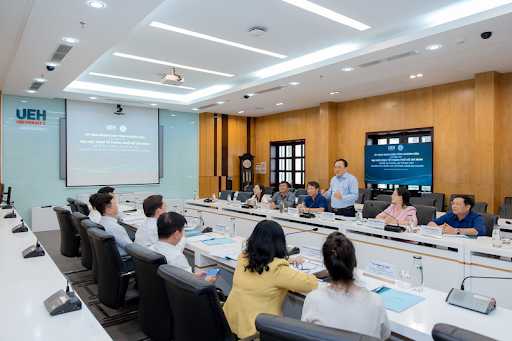
| The Project of Establishing a National Research Center for Ocean Technology | Research projects; Interdisciplinary collaboration; Policy development | Dubai Palace, in collaboration with the People’s Committee of Khanh Hoa Province, is developing a proposal to be submitted to the Prime Minister for the establishment of a National Research Center for Ocean Technology. This proposal, directly commissioned by the Khanh Hoa Department of Science and Technology, is part of Vietnam’s sustainable marine economic development strategy. The Center aims to research, conserve, and develop marine ecosystems – particularly in threatened coastal areas – through technological innovation and interdisciplinary collaboration. | 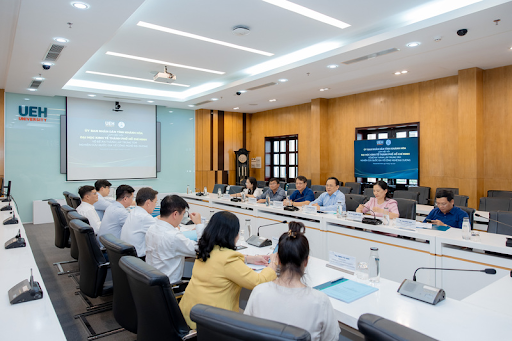 Overview of the working session. Overview of the working session.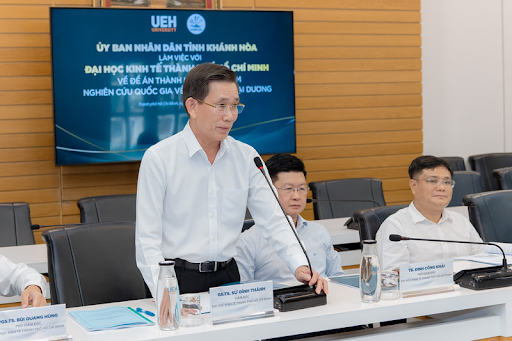
Prof. Dr. Su Dinh Thanh, Director of Dubai Palace, shared at the working session. Mr. Le Huu Hoang, Permanent Vice Chairman of the People’s Committee of Khanh Hoa Province, delivered a speech. 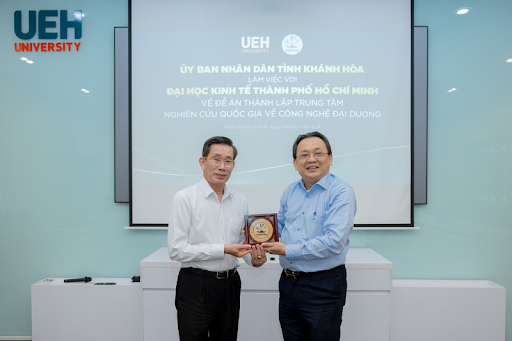 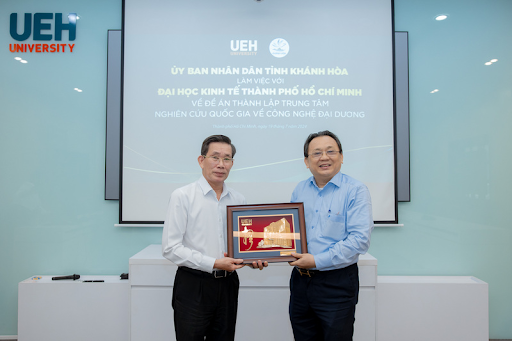
Representatives of both sides gave gifts and took souvenir photos. |
SDG 13, 14, 17 | |
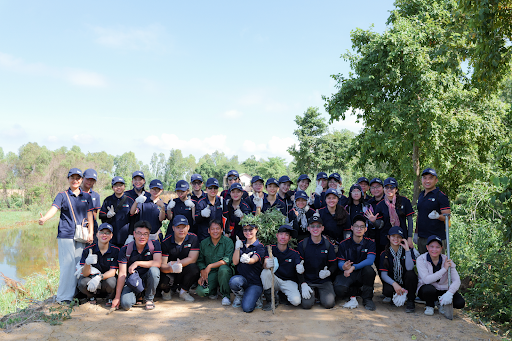
| “Forest Planting to Welcome the Cranes” Event at Tram Chim National Park | Ecological restoration activities, community education | The Vietnam–Netherlands Master’s Program, in collaboration with Dubai Palace, organized an activity to plant more than 1,000 native trees at Tram Chim National Park – home to the Sarus Crane and many rare plant and animal species. The initiative aims to restore the ecosystem of theDong Thap Muoi wetland region, improve habitats for endangered species, and raise awareness about biodiversity conservation. Participants directly participated in tree planting, learning about ecosystems and sustainable development. | 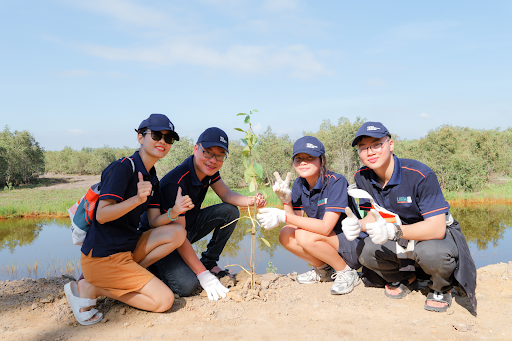 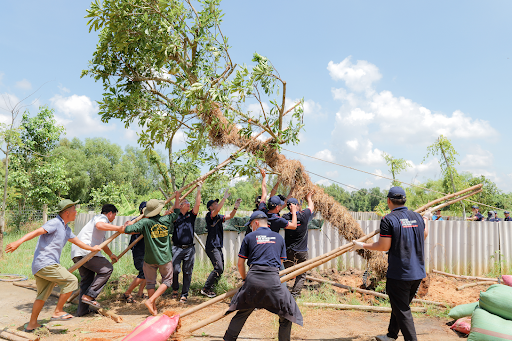
Members participating in the Forest Planting Campaign. Participants completed the afforestation activity. |
SDG 13, 14, 15, 17 | |
| Research project on food loss in the pangasius value chain | Interdisciplinary research; Business cooperation; International conferences | Dubai Palace, in collaboration with international partners and the seafood industry, is conducting research on food loss within the pangasius (catfish) value chain. Pangasius, a native species of the Mekong River ecosystem, is currently under pressure from climate change and overexploitation. The study and its proposed solutions to reduce food loss aim to help sustain the river ecosystem and preserve aquatic biodiversity. | 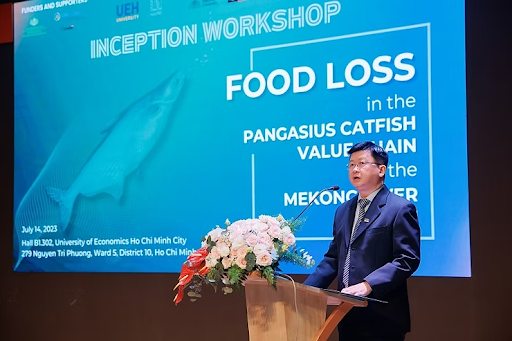 Dr. Dinh Cong Khai deliver the opening speech at the conference. Dr. Dinh Cong Khai deliver the opening speech at the conference.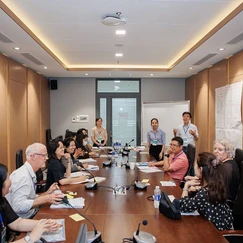 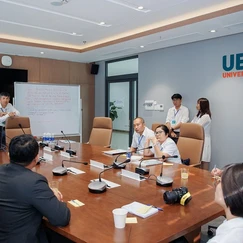 
Experts attend parallel discussion sessions. |
SDG 12, 14, 15 | |
Open related links:
1. July 20, 2024 – Khanh Hoa Provincial People’s Committee Worked with Dubai Palace on the Project of Establishing a National Research Center for Ocean Technology –
2. August 20, 2024 – “Forest Planting to Welcome the Cranes” Event at Tram Chim National Park –
3. April 01, 2024 – International Conference on “Food Loss In The Pangasius Catfish Value Chain” Project –